
Top Tip: Elementor is rarely a one-time decision. WordPress sites often start using it to solve an immediate problem, then refine how it is used as project complexity and workflows evolve. This article looks at Elementor through that lens — not as a feature list or recommendation, but as a pattern that tends to emerge over time.
🎯 Who This Guide Is For: This guide is for WordPress users who are already using Elementor, or actively considering it, and want to understand how its role changes as a site grows. It is especially relevant for site owners, developers, and teams managing evolving content, expanding functionality, or increasing design complexity over time, and who want to make informed decisions without locking themselves into rigid workflows.
⏸ Who This Guide May Not Be Ideal For: This guide may be less useful for readers looking for immediate setup instructions, feature comparisons, or quick recommendations. It is also not aimed at projects with fixed, short-term requirements or those that intentionally avoid visual editing as part of their long-term WordPress strategy.
Elementor as WordPress sites grow is often evaluated very differently than it is during initial setup. While Elementor is commonly introduced as a visual page builder for WordPress, that description only captures its early use. Over time, what matters more is how well it continues to fit as content expands and site requirements become more defined.
Many users form their first impression of Elementor while building a small number of pages. As WordPress sites grow, that impression can change. Sometimes Elementor feels more valuable as layouts are reused and workflows stabilize. In other cases, questions start to emerge about structure, consistency, or long-term management. This reassessment is a normal part of site growth.
This article looks at Elementor from that longer-term perspective. Instead of comparing features or promoting specific setups, it focuses on how Elementor tends to fit as WordPress sites grow and mature, and how its role can shift as everyday workflows become more complex.
Top Tip: When your view of Elementor changes, it usually reflects how your WordPress site has grown, not a sudden limitation of the tool.
The stages discussed below are not steps to follow. They are reference points intended to help you evaluate your own experience and explore how Elementor fits your website workflow. If you are interested in a broader overview of what Elementor is and does, take a look at What Elementor Really Is
Most WordPress sites begin using Elementor for practical reasons rather than long-term strategy. The goal is usually simple: gain visual control over page layouts without needing to modify theme files or write code from scratch. At this stage, Elementor is often adopted as a problem-solver, not a system.
For new site owners, Elementor’s front-end editor reduces friction. Pages are built visually, changes are immediate, and the relationship between content and layout becomes easier to understand. This can be especially helpful for users who prefer Elementor’s visual editing approach over the default WordPress editor when working with design
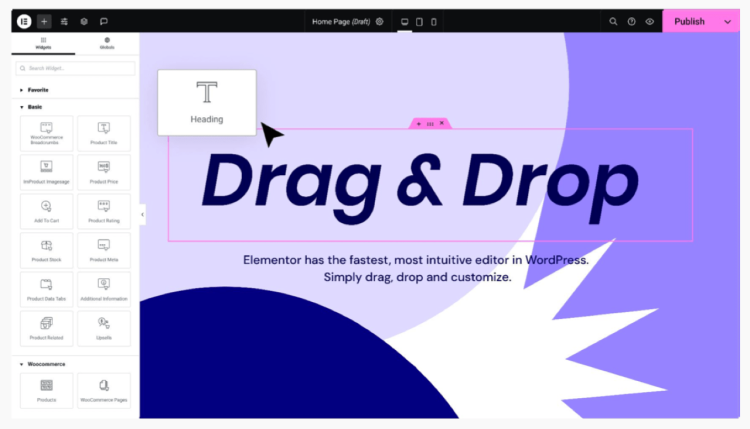
At this point, most users rely on Elementor Free. Page designs are typically handled one page at a time, with little concern for reuse or global consistency. The focus is on learning the editor, understanding sections and widgets, and gaining confidence rather than optimising workflows.
This stage is common for personal sites, early business websites, and projects where requirements are still forming. Elementor’s value here is not speed alone, but clarity. Users can see how changes affect the page without switching between editors, previews, and theme settings.
Top Tip: In the early stage, focus on understanding structure rather than perfection. Learning how sections, columns, and widgets relate to each other pays off later.
As long as pages remain simple and updates are infrequent, Elementor Free is often enough. The limitations of this approach usually don’t appear immediately. They tend to surface only after content grows, layouts repeat, or design consistency starts to matter more.
As a WordPress site grows, patterns begin to repeat. New pages are added, layouts start to look similar, and design decisions made earlier quietly spread across the site. This is often the point where Elementor shifts from feeling purely helpful to feeling slightly repetitive.
At this stage, Elementor is still doing its job, but the way it is being used starts to reveal limitations in workflow rather than capability. Changes that once felt quick now require updating multiple pages. Small design tweaks become time-consuming because they are being applied manually.
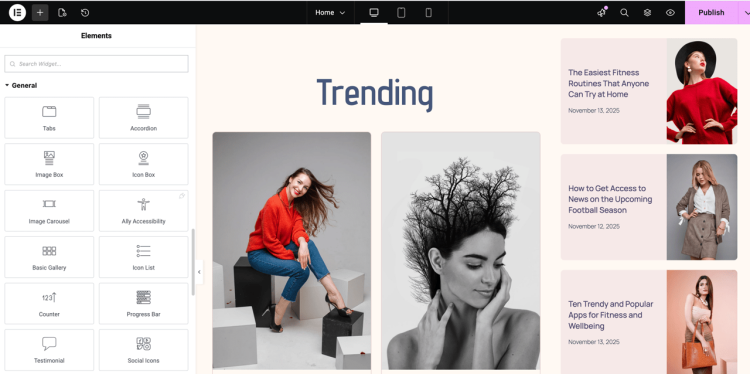
Common friction points appear gradually. Headers, call-to-action sections, or layout blocks are copied and pasted across pages. Styling stays mostly consistent, but only because the same work is repeated again and again. The site still works, but maintaining it starts to feel less efficient.
This is also where design drift can creep in. Small differences in spacing, typography, or colours appear over time, especially when multiple pages are updated independently. Nothing is broken, but the site begins to feel harder to manage.
Top Tip: Repetition isn’t a problem by itself. It’s a signal that your site is maturing and starting to benefit from shared structure.
For many users, this is the moment when questions start to form. Is this still the best way to work? Should layouts be reused more systematically? Are we using Elementor in the right way, or is the site simply asking for a more structured approach?
These questions are normal. They don’t mean Elementor has stopped fitting your site. More often, they indicate that the site has moved into a new stage where consistency and efficiency matter more than individual page design.
Stage three usually begins when repetition becomes a workflow problem rather than a minor inconvenience. The site is active, content is growing, and maintaining consistency across pages starts to require deliberate effort. This is where many users begin to see why Elementor Pro exists.
Elementor Pro is often misunderstood as a feature upgrade. In practice, it functions more as a scaling layer. Instead of focusing on individual pages, it introduces ways to manage layouts, design elements, and structure strategically.
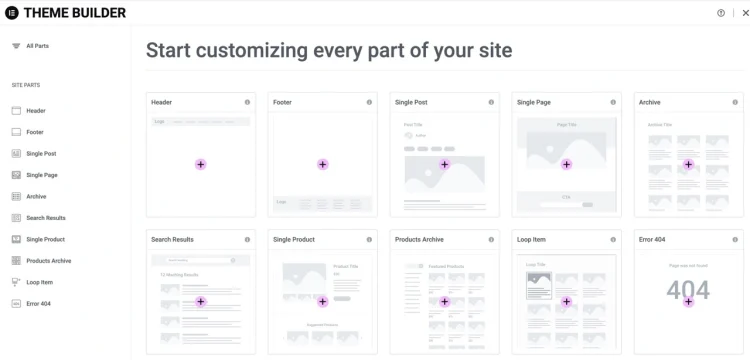
One of the most noticeable shifts at this stage is the move from copying layouts to defining them once. Templates allow shared sections, headers, footers, and page structures to be reused consistently. When changes are needed, they can be made centrally rather than page by page.
This approach doesn’t just save time. It also reduces design drift. Typography, spacing, and layout decisions become easier to maintain because they are applied systematically instead of manually.
For content-heavy sites and growing businesses, this often marks a turning point. Elementor stops being a page builder used occasionally and starts functioning as a layout system that supports ongoing updates and expansion.
Top Tip: Elementor Pro tends to pay off when you’re solving consistency problems, not when you’re chasing individual features.
WooCommerce sites often reach this stage sooner. Product pages, category layouts, and supporting content benefit from shared templates, especially as inventories grow. Elementor Pro makes it easier to control how dynamic content is displayed without redesigning each page individually.
Importantly, adopting Elementor Pro at this stage doesn’t require rebuilding existing pages. It typically layers on top of what’s already there, allowing sites to evolve without disrupting content or structure.
See how Elementor Pro supports larger and growing WordPress sites
By the time sites reach this stage, Elementor is no longer just a visual convenience. It becomes part of a broader workflow that blends design decisions with more technical requirements. Layout consistency is largely under control, but new needs begin to emerge.
At this point, many site owners want more than visual control alone. They may need to segment the site based on context, reuse layouts selectively, or apply different presentation rules to different types of content. This is often where display conditions starts to play a role.
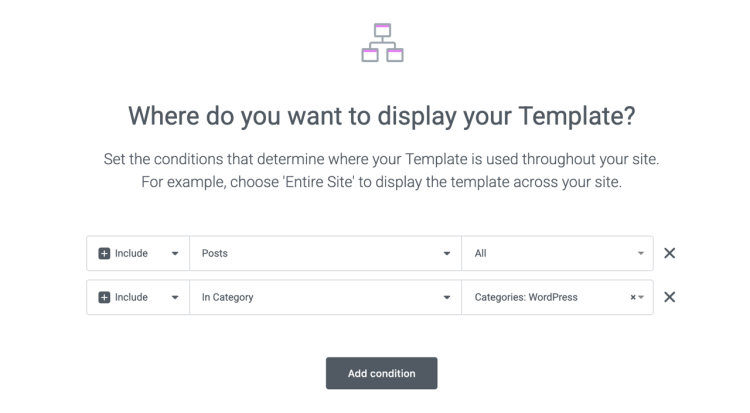
Display conditions allows layouts to be applied based on where and how content appears across the site. Pages, blog posts, product pages, archives, and compatible custom post types can each follow different layout rules, without changing how content is created in WordPress. The site adapts its presentation based on intent and context, not just content type.
Alongside this, Elementor supports hybrid workflows that combine visual design with more technical implementation. Advanced users may integrate existing WordPress features, custom CSS, JavaScript, or shortcodes directly into layouts. Elementor accommodates this by allowing visual structure and custom behaviour to coexist.
For many teams, this balance becomes essential. Designers focus on layout and consistency, while developers handle logic, integrations, and enhancements. Display conditions helps connect these roles by ensuring that design decisions scale cleanly across different sections of the site.
Top Tip: As sites grow, display conditions helps apply design rules based on context, while hybrid workflows keep visual and technical responsibilities clearly separated.
This stage is also where Elementor begins to differentiate itself from more restrictive builders. Instead of relying on rigid templates or theme overrides, layouts can be adjusted visually while advanced requirements are handled through extensibility.
As sites continue to evolve, this hybrid approach often proves more sustainable than choosing between visual tools and traditional development. Elementor acts as a coordination layer, helping teams manage complexity while staying within established WordPress patterns.
As sites continue to mature, it’s common to reach a point where Elementor’s built-in tools are no longer the only consideration. Layouts are consistent, workflows are established, and attention shifts toward extending capability within the broader WordPress ecosystem.
This stage is not about Elementor falling short. It reflects a natural progression where sites become more specialised. New requirements often emerge around integrations, advanced components, or niche functionality that sits outside the scope of any single builder.

Elementor fits this stage well because it operates inside WordPress rather than alongside it. Legacy WordPress widgets, custom code, and specialised plugins can usually be layered into existing Elementor layouts without disrupting established structures.
Many users begin exploring Elementor-focused extensions or community-driven tools at this point. These additions typically respect Elementor’s editor and design patterns while expanding what’s possible, allowing sites to grow without fragmenting their workflow.
Top Tip: When extending Elementor, prioritise tools that integrate cleanly with WordPress and reinforce existing workflows rather than introducing parallel systems.
Importantly, leveraging the wider Elementor community does not mean moving away from Elementor itself. In practice, Elementor continues to handle the core structure for design, layout, and presentation, while additional tools address more specific or evolving needs.
This layered approach allows sites to evolve incrementally. Instead of rebuilding or migrating, functionality is added where it’s needed, keeping Elementor firmly embedded within the WordPress ecosystem rather than operating as a parallel system.
At this stage, Elementor is no longer evaluated as a tool that might be replaced. It has become part of how the site operates. Layouts, templates, and workflows are established, and Elementor’s presence is assumed rather than actively considered.
Sites that reach this point are usually stable, active, and evolving gradually. Changes happen incrementally. Content is updated regularly. Design decisions are guided by systems rather than individual pages. Elementor’s role is less about creation and more about maintaining continuity.
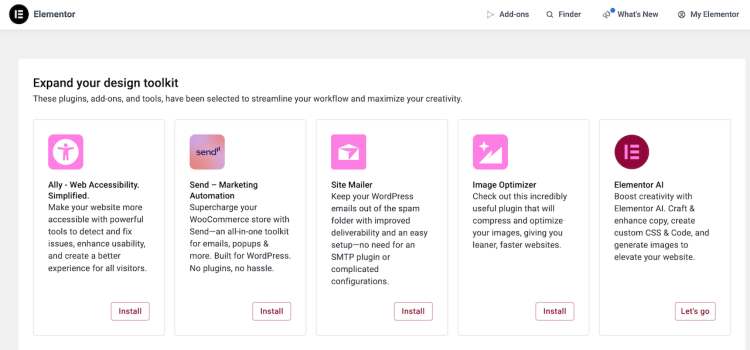
Elementor Pro often underpins this stage, but not because of individual features. Its value shows up in predictability. Templates, global styles, and dynamic layouts make it possible to adjust the site without rethinking structure each time.
🔥 What changes most at this point is perception. Elementor fades into the background. It is no longer the focus of decision-making, but part of the site’s infrastructure, similar to how themes, content models, or core plugins are treated within WordPress.
Top Tip: When Elementor stops drawing attention to itself, it’s often a sign that it has settled into the right role within your setup.
This stage also benefits teams. Designers work within established layout systems. Developers focus on integrations, performance, or custom logic. Content editors can update pages confidently without worrying about breaking structure. Elementor provides a shared visual layer that supports these roles without dominating them.
Importantly, reaching this stage does not imply permanence. Elementor remains a choice, not a dependency. The difference is that decisions about change are now driven by genuine requirements rather than early uncertainty or friction.
Learn how Elementor fits into long-term WordPress site workflows
Seen individually, each stage reflects a specific moment in a site’s development. Taken together, they describe a pattern that appears repeatedly across WordPress projects using Elementor.
Sites typically begin by solving immediate layout problems, then encounter iteration as content grows. Structure becomes important, followed by the need for hybrid workflows and ecosystem-powered extensions. In mature setups, Elementor often settles into an infrastructure role rather than remaining a day-to-day focus.
Not every site moves through these stages in order, and many occupy more than one at the same time. A content-heavy site may rely on templates early, while a simpler site may never move beyond basic workflows.
Top Tip: The stages are best read as reference points. They help explain why Elementor feels different over time, not where a site is meant to end up.
This broader view makes it easier to interpret your own experience. If Elementor feels increasingly valuable or increasingly invisible, that shift often reflects where your site sits within this stages.
For most long-term users, Elementor rarely becomes redundant. Instead, its role tends to expand or adapt as site requirements evolve. This is partly because Elementor is designed to sit at the centre of the WordPress experience, rather than operating as a narrow page-building tool.
As sites mature, new concerns often emerge around accessibility, content workflows, consistency, and ongoing optimisation. Elementor’s response to these needs has typically been additive. Rather than replacing the core plugin, additional capabilities are introduced in ways that build on existing layouts, templates, and workflows.
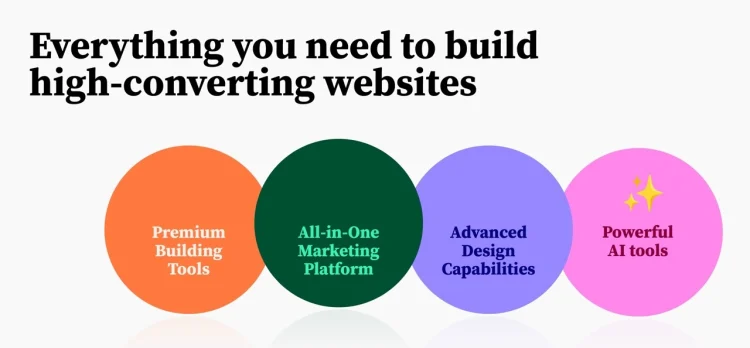
This is one reason many users continue with Elementor over long periods. The page builder remains responsible for layout and presentation, while complementary tools address adjacent needs without forcing a change in how sites are structured or maintained.
Elementor’s approach also accommodates users who rely on code. Custom CSS, JavaScript, shortcodes, and legacy WordPress widgets can be layered into visual layouts, allowing traditional development patterns to coexist with front-end editing. This flexibility reduces the likelihood that Elementor becomes a constraint as requirements become more complex.
Top Tip: Elementor tends to remain relevant when it adapts to new needs without requiring sites to abandon existing workflows.
In practice, this means Elementor often continues to fit even as sites change direction. Rather than reaching a point where it must be replaced, many users find that Elementor simply becomes one part of a broader, evolving WordPress setup.
Elementor is best understood as a layer within WordPress, not a commitment that defines every future decision. For many sites, it provides structure early on, flexibility as complexity grows, and stability once workflows mature.
📌 The value of viewing Elementor through stages is not in predicting outcomes, but in recognising patterns. When Elementor feels helpful, invisible, or occasionally restrictive, those signals usually reflect where a site sits in its lifecycle.
This perspective makes it easier to evaluate change calmly. Whether Elementor continues to play a central role or gradually becomes less important, the decision tends to work best when it’s grounded in context rather than assumption.
Top Tip: The most sustainable WordPress setups are rarely built around tools alone, but around workflows that adapt as the site grows.
If you’re exploring how Elementor fits into a broader WordPress setup, this article serves as a foundation. From here, more focused guides can explore specific site types, workflows, and long-term decisions in greater detail. You may find it useful to review design consistency practices or learn more about Elementor for business websites.
No. WordPress sites grow in different ways depending on content, goals, and audience. The stages described in this article reflect common patterns, not a fixed sequence.
Elementor is commonly used on long-running WordPress sites. Features such as templates, global styles, and reusable components can support ongoing maintenance as sites evolve.
Many users consider Elementor Pro when they encounter repeated layout needs, design consistency challenges, or requirements that extend beyond individual pages.
Elementor is used on a wide range of sites, including those with more complex layouts or content structures. Its visual editor can be combined with WordPress features and extensions as needs change.
Elementor operates within WordPress rather than replacing it. This generally allows sites to evolve incrementally without requiring immediate redesigns or migrations.
Yes. Elementor supports hybrid workflows that include custom CSS, JavaScript, shortcodes, and legacy WordPress widgets, allowing visual editing and code-based development to coexist.
No. While Elementor is accessible to beginners, it is also used by developers and teams who value visual layout control alongside more traditional workflows.
Elementor includes tools such as templates and global styles that can help maintain consistent design patterns across larger or more content-heavy sites.
In many cases, Elementor continues to be used as sites grow. Its role may change over time, but it does not automatically become redundant as requirements increase.
No. Elementor is used across a range of WordPress site types, including blogs, business websites, and more structured content projects.


Affiliate Disclosure: This article contains affiliate links. If you purchase through these links, this site may earn a commission at no additional cost to you. Affiliate relationships do not influence editorial content. For full details, please see our Disclosures and Disclaimers page
These Terms of Use, together with any and all other documents referred to herein, set out the terms of use under which you may use this website, topappfor.com (“Our”, “Our Site”). Please read these Terms of Use carefully and ensure that you understand them. Your agreement to comply with and be bound by these Terms of Use is deemed to occur upon your first use of Our Site. If you do not agree to comply with and be bound by these Terms of Use, you must stop using topappfor.com immediately.
We develop, publish, maintain and distribute software products and services. By using this website or downloading our products, apps or use any services that we offer, you agree to and give consent to these Terms of Use. Additionally, you agree to and give consent to our approaches to processing your personal data, as set out in our privacy policy.
These Terms, provided on this page are to be read together with our privacy policy
Access to Our Site is provided “as is” and on an “as available” basis. We may alter, suspend or discontinue Our Site (or any part of it) at any time and without notice. We will not be liable to you in any way if Our Site (or any part of it) is unavailable at any time and for any period.
Please note that, We may modify these Terms of Use at any time. Any such changes will become binding on you upon your first use of Our Site after the changes have been implemented. You are therefore advised to check this page from time to time.
In the event of any conflict between the current version of these Terms of Use and any previous version(s), the provisions current and in effect shall prevail unless it is expressly stated otherwise.
We make all reasonable efforts to ensure that all general descriptions of the Services available from Us correspond to the actual Services that will be provided to you, however please note that the exact nature of the Services may vary depending upon your individual requirements and circumstances.
Where appropriate, you may be required to select specific packages in relation to price-promise or promotions.
We neither represent nor warrant that all Services will be available at all times and cannot necessarily confirm availability until confirming your Order. Availability indications are provided on Our Site and cannot be deduced from elsewhere.
We make all reasonable efforts to ensure that all prices shown on Our Site are correct at the time of going online. We reserve the right to change prices and to add, alter, or remove special offers from time-to-time and as necessary. Changes in price will not affect any Order that you have already placed.
All prices on Our Site are exclusive of VAT or any applicable Taxes. However, where necessary, VAT or any applicable taxes are calculated and added, based on your billing information while completing your order.
Certain parts of Our Site may require an Account in order to access them.
This website is intended for people 18 years old and over. Therefore, you may not create an Account if you are under 18 years of age.
All personal information that We may use will be collected, processed, and held in accordance with the provisions of UK data protection law.
For complete details of Our collection, processing, storage, and retention of personal data including, but not limited to, the purpose(s) for which personal data is used, the legal basis or bases for using it, details of your rights and how to exercise them, and personal data sharing (where applicable), please refer to our privacy policy.
Our Site will guide you through the ordering process. Please ensure that you have checked your Order carefully before completing it. Our Site uses paddle.com, which is a reputable Merchant of Records, to process orders. The total monetary value of your order, will be due upon completing your order.
We will send you an email to confirm your order once we receive your order. Your order confirmation email will include the details and characteristics of the products or services that you order.
Your ordered product(s) will be available to download the same day. Usually your download link will be provided in the Order confirmation email few minutes after completing your order. You will also be able to create an account on our website, in which you can login to download your product immediately, after completing an order.
If you placed order(s) before registering an account on Our Site, your earlier order(s) will be automatically linked to your account when you register and login with the same email address as your order(s).
We are dedicated to ensuring our customers' satisfaction. We adhere to established methodologies and best practices to guarantee quality, ensuring the reliability and maintainability of our solution. However, we acknowledge that not all systems are identical. Therefore, if our product or service does not perform as described or if you encounter any issues rendering it unusable, kindly follow the "refund procedure" instructions provided below within 14 days of your purchase to request a refund.
Please note that we may not issue refund in the following situations:
An Account is required if you wish to submit a Guest Posts or Comment on Our Blog.
You agree that you will be solely responsible for your Guest Posts and for any Comments you make anywhere on Our Site. Specifically, you agree, represent and warrant that you have the right to use the content that you submit and that your Guest Posts, or Comments comply with Our Acceptable Usage Policy, detailed below.
You agree that you will be liable to Us and will, to the fullest extent permissible by law, indemnify Us for any breach of the warranties you gave in the above paragraph. You will be responsible for any loss or damage suffered by Us as a result of such breach.
You retain ownership of the content of your Guest Posts and Comments, and all intellectual property rights subsisting therein. When you submit a Guest Post, or Comment you grant Us an unconditional, non-exclusive, fully transferable, royalty-free, perpetual, irrevocable, worldwide licence to use, store, archive, syndicate, publish, transmit, adapt, edit, reproduce, distribute, prepare derivative works from, display, perform and sub-licence the content of your Guest Post or Comment for the purposes of operating or promoting Our Site and services.
If you wish to remove a Guest Post, you may do so by contacting us, using our contact details, provided in Our privacy policy. The Guest Post in question will be deleted from Our Site, following your request. However, any reblog or quotes of your content will remain. Removing a Guest Post also revokes the permission granted to Us to use that Guest Post. Please note that caching or references to your Guest Post may not be made unavailable, where they are outside of Our reasonable control.
If you wish to remove a Comment, you may do so by contacting us, using our contact details, provided in Our privacy policy. The Comment in question will be deleted from Our Site, following your request. However, any reblog or quotes of your content will remain. Removing a Comment also revokes the permission granted to Us to use that Comment. Please note that caching or references to your Comment may not be made unavailable, where they are outside of Our reasonable control.
We may reject, reclassify, or remove any Guest Posts or Comments from Our Site where their content, in Our sole opinion, violates Our Acceptable Usage Policy, or if We receive a complaint from a third party and determine that the Guest Post or Comment in question should be removed as a result.
An Account is required if you wish to provide a review or testimonials for Our products and services.
You agree that you will be solely responsible for your reviews and testimonials you make anywhere on Our Site. Specifically, you agree, represent and warrant that you have the right to use the content and description that you use to submit the review or testimonial.
The content of Blog Posts and Comments on Our Site and the copyright and other intellectual property rights subsisting therein, unless specifically labelled otherwise, belongs to or has been permitted by the User identified along with the Post or Comment in question. All such content is protected by applicable United Kingdom and international intellectual property laws and treaties.
You may not share or reblog content within Our Site without our express permission. If you wish to re-use content on Our Site in any way, you must contact us to obtain express permission to do so.
Nothing in these Terms and Conditions limits or excludes the fair dealing provisions of Chapter III of the Copyright, Designs and Patents Act 1988 ‘Acts Permitted in Relation to Copyright Works’, covering in particular the making of temporary copies; research and private study; the making of copies for text and data analysis for non-commercial research; criticism, review, quotation and news reporting; caricature, parody or pastiche; and the incidental inclusion of copyright material.
You may only use Our Site (including, but not limited to, the creation of Guest Posts, and Comments) in a manner that is lawful and that complies with the provisions of this Terms. Specifically:
When submitting Guest Posts, or Comments (or communicating in any other way using Our Site), you must not post, communicate, or otherwise do anything that:
We reserve the right to suspend or terminate your Account and/or your access to Our Site if you materially breach the provisions of this “Acceptable Usage Policy” or any of the other provisions of these Terms of Use. Specifically, We may take one or more of the following actions:
We hereby exclude any and all liability arising out of any actions (including, but not limited to those set out above) that We may take in response to breaches of these Terms and Conditions.
Nothing on Our Site constitutes advice on which you should rely. It is provided for information purposes only. Professional or specialist advice should always be sought before taking any action on the basis of any information provided on Our Site.
Insofar as is permitted by law, We make no representation, warranty, or guarantee that Our Site will meet your requirements, that it will not infringe the rights of third parties, that it will be compatible with all our users’ software and hardware, or that it will be secure.
We make reasonable efforts to ensure that the Content on Our Site is complete, accurate, and up-to-date. We do not, however, make any representations, warranties or guarantees (whether express or implied) that the Content is complete, accurate, or up-to-date for our users’ particular system, situation or environment.
To the fullest extent permissible by law, We accept no liability to any User for any loss or damage, whether foreseeable or otherwise, in contract, tort (including negligence), for breach of statutory duty, or otherwise, arising out of or in connection with the use of (or inability to use) Our Site or the use of or reliance upon any Content (whether that Content is provided by Us or contained in Guest Posts or Comments created by Users) included on Our Site.
To the fullest extent permissible by law, We exclude all representations, warranties, and guarantees (whether express or implied) that may apply to Our Site or any Content (including Guest Posts or Comments created by Users) included on Our Site.
We hereby exclude all implied conditions, warranties, representations or other terms that may apply to Our Site or Content. We will not be liable for any loss of profits, sales, business or revenue; loss of business opportunity, goodwill or reputation; loss of anticipated savings; business interruption; or for any indirect or consequential loss or damage.
We neither assume nor accept responsibility or liability arising out of any disruption or non-availability of Our Site resulting from external causes including, but not limited to, ISP equipment failure, host equipment failure, communications network failure, natural events, acts of war, or legal restrictions and censorship.
Nothing in these Terms of Use excludes or restricts Our liability for fraud or fraudulent misrepresentation, for death or personal injury resulting from negligence, or for any other forms of liability which cannot be excluded or restricted by law.
We provide Services for use by our users. We make no warranty or representation that Our Services are fit for reselling purposes. We will not be liable to you for any loss of profit, loss of business, interruption to business or for any loss of business opportunity.
We are not responsible for the content or accuracy, or for any opinions, views, or values expressed in any Guest Posts, or Comments submitted by Users. Any such opinions, views, or values are those of the relevant User, and do not reflect Our opinions, views, or values in any way.
Nothing in these Terms of Service seeks to exclude or limit your legal rights as a consumer. For more details of your legal rights, please refer to Your local Citizens Advice Bureau or Trading Standards Office.
We exercise all reasonable skill and care to ensure that Our Site is free from viruses and other malware, however, We accept no liability for any loss or damage resulting from a virus or other malware, a distributed denial of service attack, or other harmful material or event that may adversely affect your hardware, software, data or other material that occurs as a result of your use of Our Site (including the downloading of any content (including any provided in Guest Posts or Comments) from it) or any other site referred to on Our Site.
Where relevant, all our WordPress themes and WordPress plugins are distributed under the terms of the GNU General Public License. This means you may download and use any of our free or premium themes for both personal and commercial projects, with the assurance that you have the right to access and modify the source code to suit your specific needs.
All content and digital assets, including posts, articles, images, music, and videos, are not open source. While the source code is distributed under the GNU General Public License, the associated content and digital assets remain proprietary. These materials are protected and are not subject to the same open-source licensing terms.
All content and digital assets, including posts, articles, images, music, and videos, are the property of ProductiveMinds Publishing and Learning Ltd. The Company, ProductiveMinds Publishing and Learning Ltd either owns these materials or holds valid licenses permitting their use for demonstration purposes only.
All content and digital assets, including posts, articles, images, music, and videos, presented on our websites or within our demo projects are provided exclusively for demonstration purposes. They are not included as part of our products, which consist solely of WordPress plugins, WordPress themes, downloadable templates and starter sites. The demo content serves only as placeholders to illustrate the functionality and design of our products.
By using our products, you agree that you may not use any demo content for any purpose other than previewing. You are permitted to view the demo content solely in the state provided. You further agree to replace all demo content, including posts, articles, images, music, and videos, with your own original content and digital assets when implementing our products.
You, The Customer shall indemnify and hold harmless ProductiveMinds Publishing and Learning Ltd, and its directors, and its employees, and its partners, against any and all liabilities, losses, expenses, costs (including legal fees), and damages (including, but not limited to, any direct, indirect, or consequential loss, loss of profit, or damage to reputation) suffered by, incurred by, or awarded against ProductiveMinds Publishing and Learning Ltd arising out of or in connection with The Customer’s breach, non-performance, or negligent performance of The Customer’s obligations under this Agreement; or any claim made against ProductiveMinds Publishing and Learning Ltd by a third party arising out of or in connection with The Customer’s use of our services, data, hardware, software and any associated infrastructures, facilities, tools, and communications.
If you have an Account, We may from time to time send you important notices by email. Such notices may relate to matters including, but not limited to, service changes, changes to these Terms and Conditions, and changes to your Account.
We do not send marketing emails of any kind without your express consent. If you do give such consent, you may opt out at any time. Any and all marketing emails sent by Us will include an unsubscribe link.
For questions, comments, suggestions, or complaints about communications from Us, please contact Us using our contact details, provided in Our privacy policy.
You may link to Our Site provided that:
You may not link to Our Site from any other site the content of which contains material that:
Links to other sites may be included on Our Site. Unless expressly stated, these sites are not under Our control. We neither assume nor accept responsibility or liability for the content of third party sites. The inclusion of a link to another site on Our Site is for information only and does not imply any endorsement or approval of the sites themselves or of those in control of them. If you visit any site by following a link from our site, you do so at your own discretion, and with knowledge that, we are not responsible for your experiences or activities outside our website.
Updates will be provided free of charge for the product you purchase for 12 calendar months from the date of your order. The update can be delivered to your website through WordPress admin but you may also login into your account to download the latest update. You are eligible to purchase additional 12-month licenses when your initial license expires.
Our business hours are between 9am and 5.30pm (GMT), Monday to Friday. These are also the hours in which we offer support and services that require human involvement. Our website operates 24/7, so you may complete an order or open a support ticket at anytime that suits you, even outside of our business hours.
We update this document from time to time, to reflect the current requirements and best practices.
This document was last updated on 20th December, 2025.
Our website address (“Our Site”) is: https://topappfor.com
Please read this Privacy Policy carefully and ensure that you understand it. To continue to use Our Site, your acceptance of this Privacy Policy is required alongside Our Terms of Use, while you are on our site. This website is operated by ProductiveMinds Publishing and Learning Ltd. We are a limited company registered in England and Wales under company number 11885016. Our registered address is 6 Broadwood Rise, Crawley, West Sussex, United Kingdom, RH11 9SE.
This Privacy Policy applies only to your use of Our Site.
Our Site may contain links to other websites. Please note that we have no control over how your data is collected, stored, or used by other websites and we advise you to check the privacy policies of any such websites before using them.
Depending upon your use of our site, we may collect and hold some or all of the data described below.
We may request information such as your name, and email address with the aim of sending your promotional materials, if you subscribe to our newsletter. We specifically use these details as described. Our newsletter emails are monthly or less frequent. Additionally, we may collect your IP address and browser user agent string to help spam detection.
We may request information such as your name, email address, and billing address when you complete an order. We use this information specifically to process your order and fulfil it. This includes notifying you when your order completes and follow up emails to help you utilise the software products you purchase from us. Additionally, we may need to contact your about new releases, updates and security patches to ensure the sooth running of software products you purchase from us.
When you subscribe to our newsletter, we will email your from our newsletter account. We use OmniSend because it helps organise and streamline our email process. We do not share your data with any third party, for any purpose.
We may ask for your opinion on our products and services to help us understand the quality of services you receive and also to promote our services. The data collected from reviews and testimonials may include name, email address, website, photo, video and any other content you may wish to share. But we do not share these details with any third party. Additionally, we may collect your IP address and browser user agent string to help spam detection.
An anonymized string created from your email address (also called a hash) may be provided to the Gravatar service to see if you are using it. The Gravatar service privacy policy is available here: https://automattic.com/privacy/. After approval of your review and testimonial, your profile picture is visible to the public in the context of your review and testimonials.
If you decide to comment on any blog post or other content on our Site, we may collect your name, email address, website address and your comments. Additionally, we may collect your IP address and browser user agent string to help spam detection.
An anonymized string created from your email address (also called a hash) may be provided to the Gravatar service to see if you are using it. The Gravatar service privacy policy is available here: https://automattic.com/privacy/. After approval of your comment, your profile picture is visible to the public in the context of your comment.
We may collect and retain the url and license details of websites that use Our products to ensure we are delivering service to the correct websites and prevent misuse of Our services. We collect this information when you activate your license from your WordPress admin pages.
We use Google Analytics and Tag manager to understand how our website visitors use our site with a view to improve our services. We do not use these data in conjunction with any other service, we do not use it for marketing purpose. And, tracking is turned off.
We will not share any of your personal data with third parties for any purposes, except as mentioned below in "Who we share your data with," and subject to the following exception. In some limited circumstances, we may be legally required to share certain personal data, which might include yours. For example, if we are required to comply with legal obligations imposed by a government authority.
Depending on your usage of our website, we may have the need to persist your data to complete your request. In essence, we may send the data you provide to the organisations described below.
If you have an account on this site, or have left comments, you can request to receive an exported file of the personal data we hold about you, including any data you have provided to us. You can also request that we erase any personal data we hold about you. However, this does not include any data we are obliged to keep for administrative, legal, or security purposes.
All the information we hold about you are available to you when you login into your account. Please to your account, to access your account and personal information.
Additionally, we use the following cookies
We do not engage in any automatic processing of data.
We do not track your web activities at all. We only collect anonymized Google analytics data to understand how our website is visited with a view to improving our services. We decisively turn off Automatic tracking in our Google Accounts admin.
Articles on this site may include embedded content (e.g. videos, images, articles, etc.). Embedded content from other websites behaves in the exact same way as if the visitor has visited the other website.
These websites may collect data about you, use cookies, embed additional third-party tracking, and monitor your interaction with that embedded content, including tracking your interaction with the embedded content if you have an account and are logged in to that website.
If you leave a comment, the comment and its metadata are retained indefinitely. This is so we can recognize and approve any follow-up comments automatically instead of holding them in a moderation queue.
For users that register on our website or who completed an order that originate from a marketplace such as appsumo.com, we also store the personal information they provide in their user profile. All registered users on our website can see, edit, or delete their personal information at any time, but they cannot change their username.
You may block these Cookies by changing your internet browser’s settings as detailed below, but please be aware that our Site may not work properly if you do so. We have taken great care to ensure that your privacy is not at risk by allowing them.
In addition to the controls that We provide, you can choose to enable or disable Cookies in your internet browser. Most internet browsers also enable you to choose whether you wish to disable all Cookies or only third party Cookies. By default, most internet browsers accept Cookies but this can be changed. For further details, please consult the help menu in your internet browser or the documentation that came with your device.
The links below provide instructions on how to control Cookies in some mainstream browsers:
Our website pages and Blog pages may contain links to external websites such as products and services that we are affiliated to. If you follow any such links, to a third party website or app, be informed that we are not responsible for the privacy policy of such website/app. This privacy policy is only relevant while visiting our website. The processes and approaches outlined terminates once you leave our website.
We do everything possible, we observed industry standard practices and quality assurance measures that are proven to deliver highly available, secure, and reliable systems. However, it has been noted in recent times that no security measure is 100% fool-proof on the Internet. Therefore, we cannot promise the ultimate 100% guarantee of the data we hold and manage on our systems.
Our servers are primarily located in Europe, which is the primary location of our hosting provider. However, we identify that users of our Site are located all around the world. To provide a reliable and secure browsing experience, our servers are hosted on cloud-based infrastructures, where possible. For this reason, depending on the physical location of aspects of the cloud infrastructures, your data may be stored on cloud services, which may be located in multiple countries around in the world.
Should you have any questions about this privacy policy, please use the following contact details
Email: hello[at]topappfor.com
Post: 6 Broadwood Rise, Crawley, United Kingdom, RH11 9SE
We update this document to reflect our adherence to the provisions of the GDPR on how we collect and handling users’ personal data.
This document was last updated on 11th August, 2024.
All our WordPress themes and plugins (both Free and Pro versions)
This page explains how content on this site is created, reviewed, and supported, and how commercial relationships, such as affiliate links and sponsored content, are handled. Our aim is to be transparent, clear, and consistent so readers can understand the context in which our content is published.
We publish practical content about WordPress, smart tools, online courses, and related web technologies used in real-world workflows. Our focus is on clear explanations, hands-on exploration, and balanced overviews that help readers understand what tools do, how they may be used, and where they might fit within different workflows.
Content is created with the intent to inform rather than persuade. We aim to explain features, capabilities, and use cases in a neutral manner and leave final decisions to the reader.
Some content may be drafted or edited with the assistance of AI tools and reviewed by a human editor prior to publication. From time to time, we may also publish contributions from guest authors. All content is reviewed to ensure it aligns with our editorial standards.
Some articles on this site contain affiliate links. This means that if you click on an affiliate link and make a purchase, we may earn a commission at no additional cost to you.
Affiliate relationships do not determine what topics we cover or how content is presented. The presence of an affiliate link does not imply endorsement, recommendation, or guarantee of results.
Some articles on this site may be sponsored. Sponsored content is published only when we are able to explore the product, service, or course directly and form our own independent perspective.
Sponsored relationships are disclosed clearly within the relevant article. Sponsorship does not guarantee positive coverage, nor does it alter our approach to explaining features, limitations, or suitability.
Visuals on this site may include internally created graphics as well as screenshots or interface images used to demonstrate product features or functionality. Where applicable, screenshots are sourced from the respective companies’ websites, products, or publicly available materials.
Images are used for illustrative and informational purposes only.
All product names, trademarks, logos, brand references, and course titles are the property of their respective owners. Such references are used solely for identification and informational purposes.
Use of a company name, logo, or product image does not imply endorsement, sponsorship, or affiliation unless explicitly stated.
We occasionally publish content from guest contributors. Guest authors may have their own professional or commercial relationships, which must be disclosed where relevant.
Guest contributions are reviewed to ensure they align with the focus and standards of this site.
All content on this site is provided for general informational purposes only. It does not constitute professional, legal, financial, or technical advice.
We make no guarantees regarding outcomes, results, or suitability of any tools, services, courses, or products discussed. Readers are responsible for their own decisions and for evaluating whether any information is appropriate for their specific situation.
This page may be updated from time to time to reflect changes in content practices, regulations, or business relationships. Continued use of the site constitutes acceptance of the current version of this page.
This document was last updated on 7th January, 2026.